


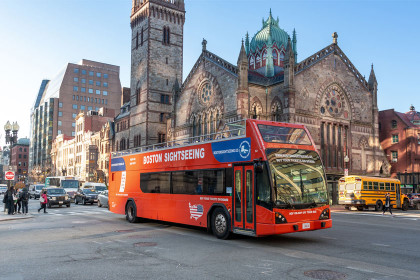
Explore Historical Attractions In Boston
Boston is one of America's most historic cities, attracting visitors who want to explore famous historical attractions in Boston, Revolutionary War landmarks, and colonial-era sites. From the Freedom Trail and historic churches to museums, monuments, and iconic public buildings, the city offers countless opportunities to experience American history firsthand. Whether you are searching for the best historical places in Boston, historical sites in Boston, or historical things to do in Boston, these famous landmarks and attractions showcase the city's rich heritage and lasting historical significance.
Freedom Trail
The Freedom Trail is a 2.5-mile walking trail that winds through the heart of historic Boston. It provides an excellent way to explore many of the city's important sites related to the American Revolution and its founding fathers. The trail begins at the Boston Common, the site of the first public park in America.
Visitors can stop at the Old State House, Bunker Hill Monument, USS Constitution Museum, and more. The path also winds through several world-famous public parks and green spaces, including Granary Burying Ground, Boston Common, and the Public Garden. All along the way, visitors can find historical markers and monuments that tell the story of America's fight for independence.
Boston Common & Public Garden
Boston Common is the oldest public park in the United States, established in 1634 on land originally used for cattle grazing and public gatherings. Over nearly four centuries it has hosted British troop encampments, abolitionist rallies, public executions, and today free summer concerts and winter ice skating on Frog Pond. Adjacent to the Common is the Boston Public Garden, home of the famous Swan Boats, which have carried visitors across the lagoon since 1877, making them one of the oldest continuously operating attractions in the city.
Both the Common and Public Garden are free to visit and are covered on the Boston Sightseeing Hop-On Hop-Off route, making them an easy first or last stop of the day.
Old State House (Boston)
Old State House (Boston) is a National Historic Landmark located in the heart of downtown. Built in 1713, it was the seat of government for the Province of Massachusetts Bay and later the Commonwealth of Massachusetts. In 1776, the Declaration of Independence was first read to citizens on July 18th. The Old State House combines Georgian and Federal architectural styles and has been restored to reflect how it looked in 1798.
Today, visitors can explore its rich history through interactive displays, hear firsthand accounts from costumed interpreters, view rotating exhibits that tell stories from the past, or watch a movie about Boston's role in the American Revolution.
Boston Massacre Site
The Boston Massacre Site is one of the most important historical attractions in Boston. Located on the corner of State Street and Congress Street, the site commemorates a violent clash in 1770 between British troops and American colonists.
On March 5th of that year, a group of colonists hurled insults and snowballs at the soldiers when an altercation broke out. Shots were fired, killing five colonists and injuring several more. This event marked the beginning of the American Revolution and is a reminder of how far the country has come since then.
Faneuil Hall
Faneuil Hall is one of Boston, Massachusetts's most iconic historic attractions. Located in the heart of downtown near Quincy Market, it has been a gathering place for Americans since 1742. It was built by wealthy merchant Peter Faneuil as a gift to the people of Boston and designed by the artist John Smibert, his only architectural work. Architect Charles Bulfinch later expanded the building in 1806, adding a third floor and doubling its width. The building is best known as a center for political debate and civic engagement.
Faneuil Hall remains an important part of Boston's history and culture today. It is open to visitors, who can explore the building, including the iconic Great Hall, where many famous speeches have been delivered. There are also various shops and restaurants to explore in this bustling tourist destination. The grounds outside offer several statues, memorials, and monuments commemorating Boston's past.
Granary Burying Ground
Granary Burying Ground is one of Boston's most significant historical attractions, with a rich and storied history from 1660. Located in the historic Beacon Hill district of the city, the site has held some of the city's most famous graves, including those of revolutionary figures such as Paul Revere, Samuel Adams, and John Hancock.
The burial ground is also home to many interesting monuments, including the "Old Corner" monument, which marks the original site of Benjamin Franklin's printing house. Visiting the Granary Burial Ground is a great way to understand Boston's past and learn about some of its most influential figures.
King's Chapel Burying Ground
The King's Chapel Burying Ground is one of the oldest historical attractions in Boston. Located close to the Freedom Trail, the cemetery was established by early Puritan settlers in 1630 and contains graves that predate the American Revolution.
Throughout its long history, many famous figures have been buried on the grounds, including John Winthrop, an influential leader of the Massachusetts Bay Colony, and Mary Chilton Winslow, one of the first women to step off the Mayflower. This cemetery, which attracts visitors worldwide, is a remarkable reminder of Boston's long history.
Bunker Hill Monument
Bunker Hill Monument is a granite obelisk in the Charlestown section of Boston, Massachusetts. It is one of the most popular tourist attractions in the city and stands as a memorial to the Battle of Bunker Hill, which took place on June 17th, 1775, during the Revolutionary War. Built between 1827 and 1843, it stands 221 feet tall and commemorates the first major battle of the American Revolution.
Visitors can climb 294 steps up to the top of the monument for a stunning view of Boston's waterfront and skyline. The interpretive center at the memorial's base includes interactive exhibits about colonial life, military tactics, and how people lived during that period.
Old North Church
Old North Church is one of the most famous historical landmarks in Boston and an important stop along the Freedom Trail. Built in 1723 in Boston's North End neighborhood, it is recognized as the oldest standing church building in the city. The church played a major role during the American Revolution and became widely known for Paul Revere's Midnight Ride, when signal lanterns were displayed from its steeple to warn colonial leaders about British troop movements.
Today, visitors can explore the historic church, learn about Revolutionary War history, and experience one of Boston's most iconic colonial-era landmarks.
Trinity Church (Boston)
Trinity Church (Boston) is one of the most renowned historical attractions in Boston. Located in Copley Square, it is a vibrant parish in the Episcopal Diocese of Massachusetts and a National Historic Landmark. Founded in 1733 on Summer Street in Downtown, this church was the first Anglican Church established in New England. However, after the original church was burnt down in the Great Boston Fire of 1872, the congregation rebuilt its church in Copley Square, which opened in 1877. It is home to an impressive collection of monuments, artefacts, and stained-glass windows that chronicle the history of the church as well as Boston itself.
Trinity Church is renowned for its architecture and its art. The church holds stained glass windows designed by Edward Burne-Jones and John La Farge, sculptural work by Daniel Chester French and Augustus Saint-Gaudens, and a statue of the church's first rector, Phillips Brooks, outside its doors.
Paul Revere House
Paul Revere House is a historic landmark in the North End of Boston, Massachusetts. It was the home of Paul Revere, a patriot of the American Revolution, who famously rode to Lexington on April 18th, 1775, to warn Samuel Adams and John Hancock of British troop movements. Built around 1680 and owned by the Revere family for over 200 years, this house is now a museum open to the public. Visitors can explore the home's three stories and learn about Paul Revere's life through exhibits about his work as an artisan and patriot.
Pierce-Hichborn House
Pierce–Hichborn House, located in Boston, Massachusetts, is a historic residence that dates back to the early 1700s. The home was built by Moses Pierce, a glazier, in 1711, making it one of the oldest surviving structures in the city. Boatbuilder Nathaniel Hichborn, a cousin of Paul Revere, purchased the house in 1781 and lived there until 1797. It has been carefully preserved and is now open for guided tours, operated by the Paul Revere Memorial Association.
Today, the Pierce-Hichborn House is furnished with period pieces rather than a fixed military collection, and guided tours cover the building's architecture and the families who lived there, from the Pierce and Hichborn households through the immigrant families who later called it home.
Massachusetts State House
The Massachusetts State House is an iconic landmark located in downtown Boston, Massachusetts. It has been around since 1798 and serves as the seat of government for the Commonwealth of Massachusetts. Visitors can explore a wide array of historical attractions showcasing the state's political and cultural heritage.
The State House is renowned for its impressive architecture, including its golden dome and the ornate House Chamber. Its Great Hall contains murals depicting key events in Massachusetts history. Visitors can take guided tours of the State House, which provide an educational experience about the site's significance to state culture.
USS Constitution
The USS Constitution is a historic warship preserved and maintained in Boston since 1797. Located in the Charlestown Navy Yard, it is the world's oldest commissioned warship still afloat. USS Constitution was originally built to protect American merchant ships from European warships.
The vessel is renowned for its success in battle during the War of 1812, when it earned its nickname "Old Ironsides" after surviving multiple engagements with British ships without significant damage. Visitors to the USS Constitution Museum can explore exhibits detailing the ship's history and construction, as well as view artefacts (archaeology) from naval battles, such as cannons and swords.
Boston Tea Party Ships & Museum
The Boston Tea Party Ships & Museum is a must-see historical attraction in the heart of Boston, Massachusetts. The museum and museum ship are devoted to preserving and sharing the history of the historic event that sparked the American Revolution.
Visitors can experience what it was like for those who partook in the original tea party by touring a replica of three ships: the Beaver, the Eleanor, and the Dartmouth. The museum features interactive exhibits, live actors in period costumes, and a multimedia presentation on this iconic event. Guests can also explore artefacts recovered from the bottom of Boston Harbor to learn more about the Tea Party's impact.
Boston Public Library
The Boston Public Library is one of Boston's most iconic and beloved historical attractions. Established in 1848, this public library was the first extensive free municipal library in the United States. It houses more than 23 million volumes, making it one of the largest public libraries in the world. The historic building is located on Boylston Street in Copley Square and contains spectacular architecture, murals, and sculptures. Visitors to the library can explore its many collections and exhibitions or participate in various events such as lectures, book clubs, music performances, and more.
Black Heritage Trail & African Meeting House
Running through Beacon Hill, the 1.6-mile Black Heritage Trail tells the story of Boston's 19th-century free Black community, one of the largest and most politically active in the pre-Civil War North. The trail's centerpiece is the African Meeting House, built in 1806 and believed to be the oldest surviving Black church building in the United States. It served as a school, community hall, and during the abolitionist movement a meeting place for leaders including Frederick Douglass and William Lloyd Garrison.
The trail also passes the Robert Gould Shaw and 54th Regiment Memorial, honoring one of the first official Black regiments in the U.S. Army during the Civil War. Along with the Freedom Trail stops, this route is included on the Boston Sightseeing Charlestown & Beacon Hill tour, making it easy to combine with the rest of your historical sightseeing in one day.
Boston's Historical Landmarks at a Glance
Boston's 17 sites above only begin to cover the city's depth of preserved history. Boston is home to 57 National Historic Landmarks, one of the highest concentrations of any American city, spanning colonial meeting houses, Revolutionary War battle sites, and other famous historical landmarks tied to the city's 19th-century civic life and the abolitionist movement. That density is part of why the Freedom Trail, Black Heritage Trail, and the individual sites above sit so close together, and it is only a starting point for historical things to do in Boston: much of Boston's protected history fits within a few square miles of downtown, Beacon Hill, the North End, and Charlestown.
Because so many of these landmarks cluster within walking distance of each other, seeing a meaningful cross-section in a single day is realistic for most visitors, particularly along the Freedom Trail corridor. The Boston Sightseeing Hop-On Hop-Off route connects many of the sites covered above, including Boston Common, Faneuil Hall, and the Charlestown stops near Bunker Hill Monument and USS Constitution, making it a practical way to cover more ground between walking segments.
Frequently Asked Questions
What are the most famous historical sites in Boston?
Some of the most famous historical sites in Boston include the Freedom Trail, Faneuil Hall, Old State House, Old North Church, Paul Revere House, and the Boston Tea Party Ships & Museum.
How many National Historic Landmarks does Boston have?
Boston is home to 57 National Historic Landmarks, one of the largest concentrations in the United States, reflecting the city's role in colonial America, the Revolutionary War, and the 19th-century abolitionist movement.
What are the best historical things to do in Boston?
The best historical things to do in Boston include walking the Freedom Trail, visiting Revolutionary War landmarks, exploring historic churches, touring museums, and discovering colonial-era neighborhoods such as Beacon Hill and the North End.
Why is Boston important in American history?
Boston played a major role in the American Revolution and was the location of significant events such as the Boston Tea Party and the Boston Massacre. Many of the country's founding fathers, including Paul Revere, Samuel Adams, and John Hancock, are connected to sites throughout the city.
Can you explore Boston's historical sites in one day?
Yes. Many of the top historical attractions in Boston sit close together, especially along the Freedom Trail, and can be explored in a one-day sightseeing itinerary. The Boston Sightseeing Hop-On Hop-Off route covers several of these stops for visitors who want to cover more ground.
What is the oldest historical site in Boston?
King's Chapel Burying Ground and Boston Common are among the oldest historic sites in Boston, dating back to the 1630s.
Are Boston's historical attractions free to visit?
Many historical attractions in Boston, including the Freedom Trail, Boston Common, and several public landmarks, can be explored for free, although some museums and guided tours require admission tickets.

Michael R. Thompson
Writer
Navigating the streets of Boston requires more than just a map; it requires the kind of insight that only 20...
Boston Attractions


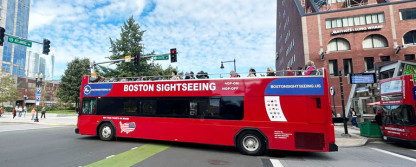
Single Ride Pass
$33.25
Explore Boston in 90 Minutes
Ride above the crowd and enjoy the panoramic view of Boston
- Boston City Tour Single Ride Pass
- Stop-1 to Stop-8
- Blue Route Tour
- Double-Decker Bus Tour
- 90 Minutes Tour
- 1 Day Validity
- Hop-on Hop-off Tour
- Charlestown Sightseeing Tour
You might also like
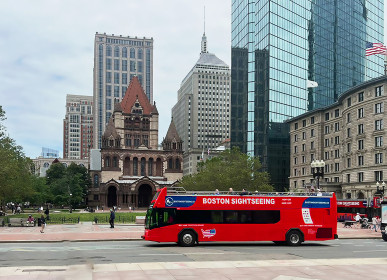
Best 10 Tourist Attractions in Boston
Boston was founded on the Shawmut Peninsula in 1630, and few American cities pack as much history into such a small area.
Things To Do Near Copley Square
Copley Square is one of the most popular destinations in Boston, surrounded by historic landmarks, shopping districts, and cultural attractions.
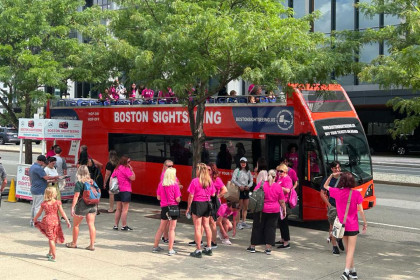
The Best Way of Sightseeing through the Double Decker Bus Tour
A double decker bus tour is one of the simplest ways to see Boston without planning a route yourself, and Boston Sightseeing.