


Boston Massacre Site
The Boston Massacre Site marks the exact spot in downtown Boston, Massachusetts where British soldiers fired into a crowd of colonists on the night of March 5, 1770, killing five men and helping set the American Revolution in motion. A cobblestone marker on the sidewalk outside the Old State House shows visitors precisely where it happened. Nothing is built on the spot itself, so this guide covers where to find the marker, what actually happened that night, the trial that followed, and what else is worth seeing nearby.
Where Is the Boston Massacre Site?
The marker sits at the intersection of State, Congress, and Devonshire Streets, on the sidewalk directly outside the Old State House, Boston's oldest surviving public building. It has stood at this exact spot since a 2011 sidewalk redesign moved it a short distance from its earlier home on a traffic island. Before that, the marker had already been relocated several times since the 1880s, including a move to a traffic island during 1960s urban renewal, to make way for subway construction and road resurfacing, always staying within the same downtown intersection where the shooting actually took place on what was then King Street.
The site is free to visit, wheelchair accessible, and open to the public at any hour, since it is simply a marked spot on a public sidewalk rather than a ticketed attraction. It sits inside the Freedom Trail's red brick walking route, directly across from the Old State House and within easy walking distance of Faneuil Hall. The closest subway stop is State, served by the Blue and Orange Lines, a one-minute walk away.
What Happened at the Boston Massacre
By 1770, Boston had been occupied by British troops for nearly two years, sent to enforce unpopular taxes and keep order after years of growing colonial resistance to British rule. Tensions between soldiers and residents ran high, and on the night of March 5, a dispute between a wigmaker's apprentice and a British sentry outside the Custom House on King Street, now State Street, drew a crowd that grew angrier and more threatening by the minute. Soldiers from the 29th Regiment were sent to support the sentry, and in the chaos that followed, they fired into the crowd without a clear order to do so.
Five men died from their wounds. Crispus Attucks, a sailor of mixed African and Native American heritage, and Samuel Gray, a rope worker, were killed instantly. James Caldwell, a young sailor, also died that night. Samuel Maverick, a 17-year-old apprentice, died the next morning, and Patrick Carr, an Irish immigrant, died of his wounds roughly two weeks later. All five were buried together at the Granary Burying Ground, a short walk from the site itself.
Paul Revere's engraving of the scene, titled "The Bloody Massacre Perpetrated in King-Street" and copied from a drawing by the young Boston artist Henry Pelham, went on sale about three weeks later and spread quickly through the colonies, helping turn a chaotic street confrontation into a rallying symbol against British rule. Colonial leaders including Samuel Adams used the event to build public anger that, five years later, would help ignite the Revolutionary War itself.
The Trial and Its Outcome
Captain Thomas Preston, who commanded the soldiers that night, was tried separately in October 1770 and found not guilty of ordering his men to fire. The eight soldiers themselves stood trial that November, defended by a young lawyer named John Adams, who argued that the soldiers had acted in self-defense against a threatening mob. The jury acquitted six of the eight soldiers. Two, Hugh Montgomery and Matthew Kilroy, were convicted of manslaughter and had their right thumbs branded under a legal provision called benefit of clergy, avoiding the harsher sentence the charge could otherwise have carried. Adams's willingness to defend unpopular clients fairly, even soldiers accused of killing colonists, became one of the defining moments of his early legal career, years before he helped draft the Declaration of Independence and became the nation's second president.
The Marker at the Site
What visitors see today is a wagon-wheel pattern of cobblestones, thirteen rings around a center stone marked with a star, set into the sidewalk inside a bronze ring added during the 2011 redesign. The design traces back to an 1887 marker placed by the Bostonian Society to show "the exact spot where" Crispus Attucks fell. A 1937 newspaper account reported that an earlier marker had been placed at the site as far back as 1805, though it's unclear whether that earlier marker survived until the Bostonian Society's 1887 installation. The stones have been removed and reset several times since then, for subway construction in 1903, a street resurfacing in 1924, and a full restoration in 1937 that returned the marker to its original wagon-wheel design.
A short walk away on Boston Common stands a separate memorial, the Boston Massacre Monument, also known as the Crispus Attucks Monument, unveiled on November 14, 1888, to commemorate the five men who died.
What To See Near the Boston Massacre Site
The Old State House, a few steps from the marker, is where the real museum experience connected to the Boston Massacre is found, not at the marker itself. Run by the nonprofit Revolutionary Spaces, the museum covers the events surrounding the American Revolution across two floors, with the Boston Massacre as one of its central stories. A joint ticket with the nearby Old South Meeting House runs $18 for adults, $16 for seniors, and $10 for youth ages 6 to 17, with children 5 and under free; the museum is typically open daily from 10:00 AM to 6:00 PM, though hours and prices should be confirmed before you visit since they can change seasonally. Revolutionary Spaces has also held commemorative events and reenactments at and around the site near the anniversary in recent years.
From the marker, it's also a short walk to the Old South Meeting House, where a large town meeting gathered in the days after the massacre to successfully demand the withdrawal of British troops, and, a few years later, before the Boston Tea Party, and to the Granary Burying Ground, the shared resting place of all five massacre victims along with Samuel Adams, John Hancock, and Paul Revere.
Frequently Asked Questions
Where was the Boston Massacre?
It happened on King Street, now State Street, in downtown Boston, at what is today the intersection of State, Congress, and Devonshire Streets, directly outside the Old State House.
What street did the Boston Massacre happen on?
King Street, which kept that name until 1784 and was renamed State Street after the Revolution to drop its reference to the British monarchy. The marker sits on the same stretch of street today.
Where did the Boston Massacre take place exactly?
A cobblestone marker on the sidewalk outside the Old State House, at the intersection of State, Congress, and Devonshire Streets, shows the precise spot where the shooting happened on March 5, 1770.
What time did the Boston Massacre happen?
It happened in the evening of March 5, 1770, after a confrontation that began outside the Custom House on King Street escalated into soldiers firing into the crowd.
Is there a museum at the Boston Massacre Site?
No. The marker itself is an outdoor historic site with no building or museum on the spot. The Old State House, a few steps away, is the nearby museum with exhibits covering the Revolutionary era, including the Boston Massacre.
Where are the Boston Massacre victims buried?
All five men, Crispus Attucks, Samuel Gray, James Caldwell, Samuel Maverick, and Patrick Carr, were buried together at the Granary Burying Ground, a short walk from the site.
What happened to the soldiers after the Boston Massacre?
Captain Thomas Preston was acquitted in October 1770. Of the eight soldiers tried that November, six were acquitted and two were convicted of manslaughter, with their right thumbs branded rather than facing harsher punishment. John Adams led their defense.
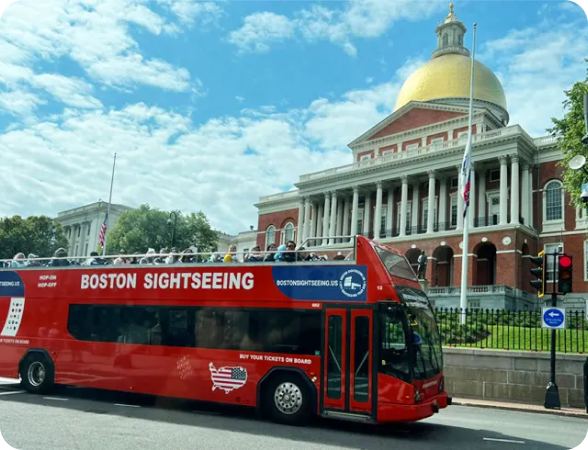
Plan Your Visit With Boston Sightseeing
To see the Boston Massacre Site alongside the rest of the Freedom Trail and downtown Boston without working out your own route, consider a tour with Boston Sightseeing's double-decker hop-on hop-off bus. The route stops within walking distance of the marker, the Old State House, Faneuil Hall, and the other historic sites covered here, so you can hop off, explore at your own pace, and hop back on when you're ready to keep moving.
Our Tour Packages
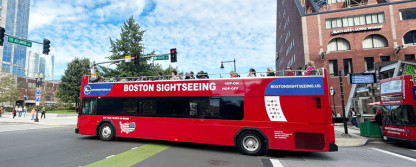
Single Ride Pass
$33.25
Explore Boston in 90 Minutes
Ride above the crowd and enjoy the panoramic view of Boston
- Boston City Tour Single Ride Pass
- Stop-1 to Stop-8
- Blue Route Tour
- Double-Decker Bus Tour
- 90 Minutes Tour
- 1 Day Validity
- Hop-on Hop-off Tour
- Charlestown Sightseeing Tour
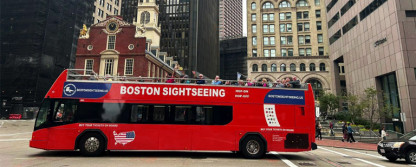
Hop-On Hop-Off All Day
$41.55
Boston City Sightseeing Tour
Experience historic Boston with unlimited hop-on hop-off at your own pace.
- Stop-1 to Stop-8
- Hop-on Hop-off Boston Tour
- Blue Route Tour
- Double-Decker Bus Tour
- 90 Minutes tour
- 1 Day Validity
- Shuttle Bus Service
- Charlestown Tour
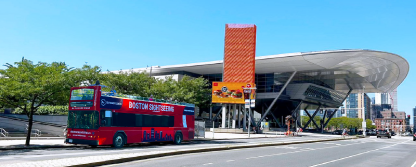
Hop-on Hop-off Boston & Charlestown Tour
$48.65
Boston & Charlestown Tour
Experience the charm of Boston & Charlestown with Boston Sightseeing at your own pace.
- Hop-on Hop-off Boston Tour
- Stop-1 to Stop-11
- Hop-on Hop-off Charlestown Tour
- Blue & Orange Route Tour
- Double-Decker Bus Tour
- Shuttle Bus Tour
- 120 Minutes Tour
- 1 Day Validity
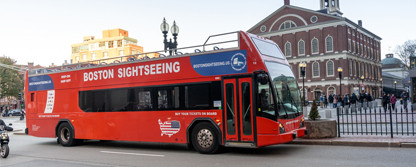
2 Days Boston & Charlestown Hop-On Hop-Off Tour
$70.40
2 Days Boston & Charlestown Tour
Explore Boston & Charlestown with Boston's first double-decker bus at your own pace.
- Hop-on Hop-off Boston Tour
- Stop-1 to Stop-11
- Hop-on Hop-off Charlestown Tour
- Blue & Orange Route Tour
- Double-Decker Bus Tour
- Shuttle Bus Tour
- 120 Minutes Tour
- 2 Days Validity
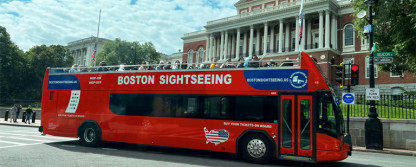
Cruise Terminal Hop-On Hop-Off Tour
$52.00
200 Minutes Hop-on Hop-off
Get onboard from Boston Cruise terminal and explore the historic beantown with Boston Sightseeing double-decker bus.
- Hop-on Hop-off Boston Tour
- Stop 1-8, 12-15
- Blue & Purple Route Tour
- Double-Decker Bus Tour
- Shuttle Bus Tour
- 200 Minutes Tour
- 1 Day Validity
- Charlestown Tour
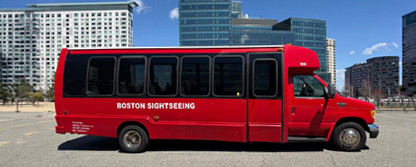
Boston & Cambridge City Tour
$63.00
Guided Photo & City Tour
A 3.5-hour guided shuttle tour featuring Boston’s most iconic neighborhoods, Cambridge highlights, waterfront views, and curated photo opportunities.
- Guided Boston & Cambridge sightseeing tour
- Approximately 3.5 hours
- Curated stops and photo opportunities
- Climate-controlled shuttle bus transportation
- Live local tour guide
- 45-minutes Quincy Market lunch break
- Same-day tour experience
- Double-Decker Bus Service
- Hop-on, hop-off service
Attractions To Explore Near This Stop
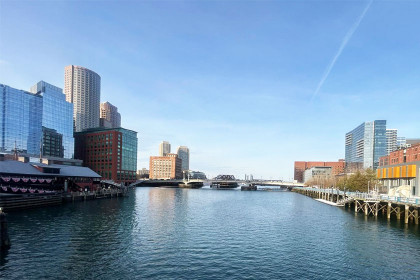
Top Things to Do in Fort Point Channel, Boston
If you stroll just across the Summer Street bridge from South Station, you will find yourself surrounded by towering brick warehouses.
Things To Do in Copley Square
Copley Square is one of Boston’s most iconic public spaces, located in the heart of Back Bay and surrounded by historic landmarks.
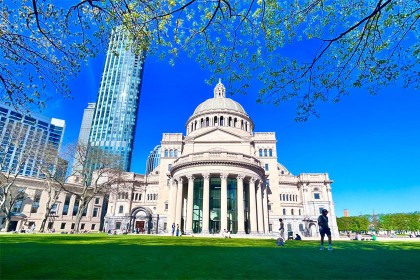
Best Museums to Visit in Boston
Boston is home to some of the most fascinating museums in the United States, offering visitors the chance to explore world-class art.