


Granary Burying Ground
The Granary Burying Ground is a historic cemetery in downtown Boston, established in 1660 and known today as the resting place of three signers of the Declaration of Independence. Located on Tremont Street, it holds roughly 2,300 markers and an estimated 5,000 or more burials, making it one of the oldest and most visited burying grounds in the country. This guide covers its history, the notable people buried here, what to see while walking the grounds, and how to plan a visit.
Location
The Granary Burying Ground sits at 120 Tremont Street in downtown Boston, between Park Street and School Street, directly across from Park Street Church. It is one of the stops on the Freedom Trail and sits within easy walking distance of Boston Common and the Massachusetts State House, making it simple to fold into a longer walk through the city's historic core.
History
The cemetery was established in 1660 as Boston's third burying ground, originally known as the South or Middle Burying Ground. It took its current name in 1737, after a large grain storage building, the town granary, was moved to the site now occupied by Park Street Church next door. According to the City of Boston, which still manages the grounds, Granary Burying Ground contains roughly 2,300 surviving markers, though records suggest the true number of burials is closer to 5,000, since many graves from the colonial and Revolutionary periods were never marked or have since been lost. The Freedom Trail Foundation counts it as the most visited historic burying ground in the Northeast, with more than one million visitors a year.
Notable Burials
Granary Burying Ground holds one of the densest concentrations of Revolutionary-era figures anywhere in the country.
Three signers of the Declaration of Independence are buried here: John Hancock, Samuel Adams, and Robert Treat Paine. Nearby lies Paul Revere, marked by a nineteenth-century stone placed well after his 1818 death, and James Otis Jr., the lawyer and orator credited with the phrase "taxation without representation is tyranny."
The cemetery also holds Crispus Attucks and the other victims of the 1770 Boston Massacre, commemorated by a shared marker, along with Peter Faneuil, the merchant who funded Faneuil Hall, nine Massachusetts governors, and Boston's first mayor. A twenty-five-foot obelisk marks the Franklin family tomb, where Benjamin Franklin's parents, Josiah and Abiah Franklin, are buried under a simple inscription bearing their names.
Exploring the Grounds
Walking through Granary Burying Ground means walking among gravestones that date back to the 1600s, most carved from slate in styles typical of Puritan New England. Because religious imagery was discouraged, carvers turned to symbolic motifs instead: winged skulls known as soul effigies, hourglasses and scrollwork representing the passage of time, and later, more decorative urn-and-willow designs as tastes shifted in the 1700s. Many of these markers were rearranged into their current straight rows during a Victorian-era renovation, done in part so the new invention of the lawn mower could maintain the grounds more easily, so the layout visitors see today is not the original colonial arrangement.
A dedicated children's tomb near the central Franklin obelisk holds several hundred young burials, a quiet reminder of how common child mortality was in colonial Boston. The site also reflects the city's full social history: burial records show Granary was used by Bostonians across economic classes, including Black and Indigenous residents, not only the prominent political figures the cemetery is best known for today.
Visiting the Granary Burying Ground
The Granary Burying Ground is free to enter and open to the public during regular daytime hours, with no ticket or admission fee required. It is wheelchair accessible, and the site is maintained by the City of Boston Parks and Recreation Department, which can be reached at (617) 635-4505 for current hours or maintenance questions. Hours can shift seasonally and around holidays, so it is worth confirming before a visit, especially outside the main tourist season.
Because many of the colonial-era markers are fragile, visitors are asked to stay on the paths and avoid touching or leaning on the headstones. A short visit of fifteen to twenty minutes is enough to see the main monuments, though history-minded visitors often spend longer reading individual stones.
Nearby Attractions
The Granary Burying Ground's downtown location puts it within a few minutes of several other Freedom Trail stops. Directly across Tremont Street is Park Street Church, where William Lloyd Garrison delivered one of his first major anti-slavery addresses in 1829. A short walk away is King's Chapel, whose congregation dates to 1686, making it Boston's oldest, though the stone building visitors see today was completed in 1754. Next to the chapel is King's Chapel Burying Ground, Boston's oldest cemetery, founded in 1630, three decades before Granary. Visitors continuing north along the Freedom Trail toward the North End often also stop at Copp's Hill Burying Ground, the city's second-oldest cemetery.
For a broader look at the city's historical landmarks and other tourist destinations in Boston, the Granary Burying Ground works well as one stop on a longer walk through downtown Boston.
Frequently Asked Questions
Is there a ticket or fee to visit Granary Burying Ground?
No. The Granary Burying Ground is free to enter, with no ticket required. It is a public cemetery maintained by the City of Boston.
Who is buried at Granary Burying Ground?
Three signers of the Declaration of Independence, John Hancock, Samuel Adams, and Robert Treat Paine, are buried here, along with Paul Revere, James Otis Jr., Crispus Attucks and the other Boston Massacre victims, Peter Faneuil, nine Massachusetts governors, and Benjamin Franklin's parents.
Is Granary Burying Ground the oldest cemetery in Boston?
No. King's Chapel Burying Ground, founded in 1630, is Boston's oldest cemetery. Granary, established in 1660, is the city's third-oldest, after King's Chapel Burying Ground and Copp's Hill Burying Ground.
How old is Granary Burying Ground?
It was established in 1660, making it over 360 years old. It took its current name in 1737, after a town granary building was relocated to the adjacent site now occupied by Park Street Church.
Where is Granary Burying Ground located?
It is at 120 Tremont Street in downtown Boston, between Park Street and School Street, directly across from Park Street Church and a short walk from Boston Common.
Is Granary Burying Ground part of the Freedom Trail?
Yes. It is one of the official stops on Boston's Freedom Trail, between Park Street Church and King's Chapel.
How long does it take to visit Granary Burying Ground?
Most visitors spend fifteen to twenty minutes seeing the main monuments, though it can easily take longer for those interested in reading individual headstones.
Planning Your Boston Tour
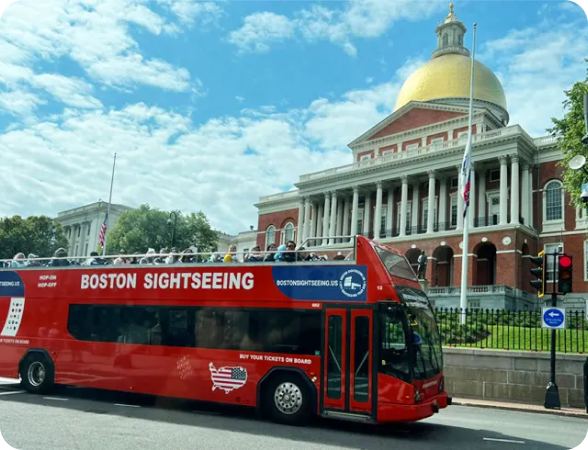
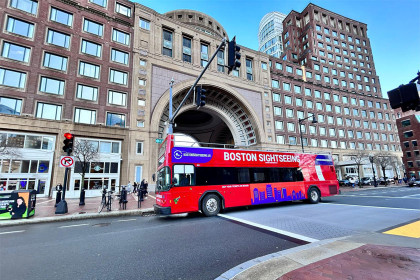
Because the Granary Burying Ground sits in the middle of downtown Boston's most walkable historic district, many visitors pair it with a wider look at the city. Boston Sightseeing's hop-on hop-off bus stops near this area, offering an informative, entertaining guide who shares the stories behind the Granary Burying Ground and the other stops along the route, so visitors can explore this landmark in depth before continuing on to other parts of the city at their own pace.
Our Tour Packages
Single Ride Pass
$33.25
Explore Boston in 90 Minutes
Ride above the crowd and enjoy the panoramic view of Boston
- Boston City Tour Single Ride Pass
- Stop-1 to Stop-8
- Blue Route Tour
- Double-Decker Bus Tour
- 90 Minutes Tour
- 1 Day Validity
- Hop-on Hop-off Tour
- Charlestown Sightseeing Tour

Hop-On Hop-Off All Day
$41.55
Boston City Sightseeing Tour
Experience historic Boston with unlimited hop-on hop-off at your own pace.
- Stop-1 to Stop-8
- Hop-on Hop-off Boston Tour
- Blue Route Tour
- Double-Decker Bus Tour
- 90 Minutes tour
- 1 Day Validity
- Shuttle Bus Service
- Charlestown Tour

Hop-on Hop-off Boston & Charlestown Tour
$48.65
Boston & Charlestown Tour
Experience the charm of Boston & Charlestown with Boston Sightseeing at your own pace.
- Hop-on Hop-off Boston Tour
- Stop-1 to Stop-11
- Hop-on Hop-off Charlestown Tour
- Blue & Orange Route Tour
- Double-Decker Bus Tour
- Shuttle Bus Tour
- 120 Minutes Tour
- 1 Day Validity
2 Days Boston & Charlestown Hop-On Hop-Off Tour
$70.40
2 Days Boston & Charlestown Tour
Explore Boston & Charlestown with Boston's first double-decker bus at your own pace.
- Hop-on Hop-off Boston Tour
- Stop-1 to Stop-11
- Hop-on Hop-off Charlestown Tour
- Blue & Orange Route Tour
- Double-Decker Bus Tour
- Shuttle Bus Tour
- 120 Minutes Tour
- 2 Days Validity
Cruise Terminal Hop-On Hop-Off Tour
$52.00
200 Minutes Hop-on Hop-off
Get onboard from Boston Cruise terminal and explore the historic beantown with Boston Sightseeing double-decker bus.
- Hop-on Hop-off Boston Tour
- Stop 1-8, 12-15
- Blue & Purple Route Tour
- Double-Decker Bus Tour
- Shuttle Bus Tour
- 200 Minutes Tour
- 1 Day Validity
- Charlestown Tour
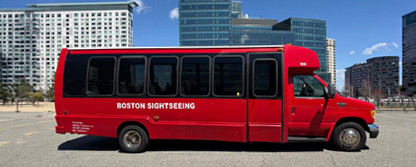
Boston & Cambridge City Tour
$63.00
Guided Photo & City Tour
A 3.5-hour guided shuttle tour featuring Boston’s most iconic neighborhoods, Cambridge highlights, waterfront views, and curated photo opportunities.
- Guided Boston & Cambridge sightseeing tour
- Approximately 3.5 hours
- Curated stops and photo opportunities
- Climate-controlled shuttle bus transportation
- Live local tour guide
- 45-minutes Quincy Market lunch break
- Same-day tour experience
- Double-Decker Bus Service
- Hop-on, hop-off service
Attractions To Explore Near This Stop

Best Fun Things To Do Near Newbury Street, Boston
Newbury Street is one of Boston's most iconic destinations, stretching through the heart of the historic Back Bay neighborhood.

15 Hidden Gems in Boston Worth Adding to Your Itinerary
Most visitors come to Boston to experience iconic attractions such as the Freedom Trail, Fenway Park, Boston Harbor, and Harvard University.
What to Do in Boston On Next Weekend
This guide covers what to see and do whether you're here this weekend, next weekend, or fitting a short visit into any two or three days.