


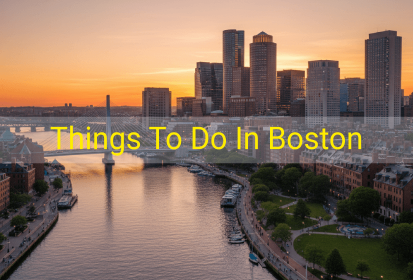
Top Things To Do In Boston In 2026: Ultimate Travel Guide
Things to do in Boston start with its history. The Freedom Trail, Boston Common and the Old State House sit close together, so a single morning on foot puts you inside the story of the American Revolution. Around that core, the city adds a working harbor, neighborhoods that each feel different, museums, Fenway Park and a food scene built on seafood and Italian bakeries. This guide covers what to see in Boston, how long each stop takes, and how to link them together by bus, from a single day to three.
2026 brought America's 250th anniversary and World Cup matches to the region. The biggest summer events are over, including the July 4 fireworks, the Sail Boston tall ships' visit on July 11 to 16 and the last World Cup match at Gillette Stadium on July 9, but the landmarks behind them are still the heart of any visit. Opening times and prices change, so confirm them with each site before you go. Last checked: October 2026.
Many of Boston's top attractions sit within walking distance of each other, and the ones that do not, across Back Bay, Charlestown, the Seaport District and the waterfront, are easy to reach on Boston Sightseeing's hop-on-hop-off route.
What Are The Best Things To Do In Boston?
The best things to do in Boston on a first visit are walking the Freedom Trail, relaxing in Boston Common and the Public Garden, browsing Quincy Market and Faneuil Hall, touring Fenway Park and spending an evening in the North End. Add a museum or two if you have time.
That is the short answer to what to do in Boston, and it works for most travelers. With extra time, add Beacon Hill, Back Bay, the Seaport District, Charlestown and the waterfront. If you want a shorter, ranked starting point for the must-do list, see the 10 best tourist attractions in Boston.
Walk Through American History On The Freedom Trail
The Freedom Trail is a 2.5-mile red-brick path through Downtown Boston and Charlestown that leads to 16 official historic sites. Walking the path itself costs nothing, because it runs along city sidewalks, though some sites charge admission. Guided walking tours are available, and many visitors follow the trail on their own with a map or an audio guide.
Historic Stops Along The Freedom Trail
Ten stops make a good first pass, and the order below follows the trail from Downtown toward Charlestown.
Boston Common was established in 1634 and is America's oldest public park. It is the trail's traditional starting point.
Massachusetts State House, completed in 1798, is topped by its gold dome and remains the seat of state government. Guided tours are offered, so check the Massachusetts State House page for details.
Granary Burying Ground is the final resting place of Samuel Adams, John Hancock, Paul Revere and several victims of the Boston Massacre. See the Granary Burying Ground guide for more on who is buried there.
Old South Meeting House is where colonists gathered to organize resistance before the Boston Tea Party in 1773.
Old State House, built in 1713, is one of the oldest public buildings in the United States. The Declaration of Independence was read from its balcony in July 1776, and the Boston Massacre took place in front of the Old State House in 1770.
Faneuil Hall, known as the Cradle of Liberty, now sits beside Quincy Market and mixes Revolutionary history with shopping and dining.
Paul Revere House, in the North End, is described by the museum as downtown Boston's oldest building. It was built about 1680. See the Paul Revere House page before you go.
Old North Church is where the signal lanterns were hung, one if by land and two if by sea. Read more about Old North Church and its steeple.
USS Constitution, nicknamed Old Ironsides, is the world's oldest commissioned naval vessel still afloat.
Bunker Hill Monument, in Charlestown, marks one of the Revolution's first major battles. Its 294 steps reward the climb with views over the harbor.
Freedom Trail Visitor Tips
- Wear comfortable walking shoes.
- Allow at least half a day for the full trail.
- Start early in summer to beat the heat and crowds.
- Carry water.
- Join a guided tour for deeper historical context, or follow the trail on your own with a map.
Our time estimates below are editorial, based on typical visits. The Nearest Stop column shows the stop our tour map lists near each site.
| Attraction | Why Visit | Recommended Time | Nearest Stop |
| Freedom Trail | Boston's signature historic walk | 3 to 4 hours | Freedom Trail sites near Stops 1 to 4 and 8 to 10 |
| Boston Common | America's oldest public park | 45 to 60 minutes | Stop 4 |
| Faneuil Hall and Quincy Market | History, shopping and dining | 2 to 3 hours | Stop 1 |
| Paul Revere House | Revolutionary history | 45 minutes | Stop 9 |
| USS Constitution | Historic naval ship | 1 to 2 hours | Stop 10 |
| Boston Tea Party Ships and Museum | Interactive Revolutionary history | 2 hours | Stop 12 (listed nearby on our tour map) |
Explore Boston Common And The Public Garden
Boston Common and the adjacent Public Garden are two of Downtown Boston's most beloved green spaces, and two of the best parks to visit in Boston. The two parks sit side by side, but they feel very different. They also change with the seasons, from spring blooms to fall foliage to ice skating at the Frog Pond in winter.
Boston Common
Boston Common has served as a public gathering place for nearly four centuries, and it is Stop 4 on our Blue route. Its wide lawns and tree-lined paths make it a natural starting point for Beacon Hill, Back Bay and the Theater District.
The Public Garden
The Boston Public Garden is known for Victorian landscaping, footbridges and the Swan Boats, launched in 1877 and still family-run. The boats operate on a seasonal schedule, so check opening dates before you plan a ride.
Experience Boston's Waterfront And Harbor
Boston Harbor has shaped the city since its founding in 1630. Today it combines maritime history with sightseeing cruises, the Harborwalk and the Seaport District's modern waterfront. See things to do on the Boston waterfront for the full guide.
Harborwalk And Seaport
The Harborwalk is a public path along the water. Combined with the Seaport District's restaurants and modern buildings, it makes an easy afternoon walk. The Fort Point Channel, covered in our Fort Point Channel guide, runs between the Seaport and Downtown.
Harbor Cruises And Islands
A harbor cruise is one of the more distinctive ways to see Boston. Options include historic sightseeing cruises, sunset cruises, whale watching, seasonal ferries to the Boston Harbor Islands and dinner cruises. The routes pass the Seaport District, Castle Island, the Charlestown Navy Yard and the USS Constitution along the way.
Visit The Boston Tea Party Ships And Museum
The Boston Tea Party Ships and Museum is at 306 Congress Street, on the Congress Street Bridge, and it recreates the 1773 protest through a guided tour, full-scale replica ships and live reenactments rather than a self-guided walk-through. It is especially popular with families, students and first-time visitors.
The Boston Children's Museum is at 308 Congress Street, so the two are on the same street. That makes this stretch easy to pair with the Harborwalk and the Seaport District.
Explore Boston's Most Distinct Neighborhoods
Each of Boston's neighborhoods has its own character, and exploring a few beyond the main landmarks gives a fuller picture of the city.
Beacon Hill
Beacon Hill is known for narrow brick streets, gas lamps and Federal-style townhouses, with Acorn Street and Louisburg Square as its most photographed corners. It sits beside Boston Common, so it folds into almost any itinerary, and Stop 5 at Cheers is on Beacon Street. See things to do in Beacon Hill for a full neighborhood guide.
North End
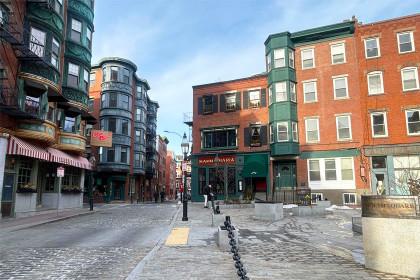
Boston's Little Italy blends Revolutionary history with authentic Italian food. Visit the Paul Revere House and Old North Church, then stay for handmade pasta or cannoli from one of the neighborhood's cafes. Stop 9 is Historic North End. See things to do in the North End for a full neighborhood guide.
Back Bay
Back Bay covers Copley Square, Trinity Church, the Boston Public Library and Newbury Street's shopping stretch, and it is especially strong for architecture and photography. Stops 6 and 7 serve the library and Trinity Church. See things to do in Back Bay for a full neighborhood guide.
Seaport District
Once an industrial area, the Seaport District is now a waterfront neighborhood with the Harborwalk, contemporary architecture and a lively restaurant scene.
Chinatown
Chinatown is described as the only surviving historic Chinese enclave in New England. It offers authentic restaurants, bakeries and community festivals in a compact, central footprint that is easy to add to a Downtown day. See things to do in Chinatown for a full neighborhood guide.
Charlestown
Across the water from Downtown Boston, Charlestown holds the USS Constitution, the Charlestown Navy Yard and the Bunker Hill Monument, with a quieter pace than the historic core. Stop 10 serves the USS Constitution Museum and the Navy Yard. See things to do in Charlestown for a full neighborhood guide.
Cambridge
Technically a separate city, Cambridge is included in most Boston itineraries for Harvard University, Harvard Square and MIT, along with the Charles River waterfront and a strong independent bookstore and cafe scene. Our guided Boston and Cambridge City Tour is listed from $63.00 (checked October 2026).
Tour Historic Fenway Park
Opened in 1912, Fenway Park is the oldest ballpark still in use in Major League Baseball and the home of the Boston Red Sox. Guided tours run outside game days and reach areas normally off limits, including the Green Monster, the press box and the dugouts. Check tour times before you go.
Fenway is not on our bus route. Take the Green Line to Kenmore or Fenway station. The neighborhood around the park adds restaurants, breweries and music venues worth exploring before or after a visit.
Visit Boston's World-Class Museums
Boston's museums range from art to science to marine life. Our guide to the best museums to visit in Boston compares them in more detail. Most of the museums below are off our route, so plan on the T, with the New England Aquarium at Stop 1 as the exception.
Museum of Fine Arts
The Museum of Fine Arts holds more than 500,000 works spanning ancient Egyptian artifacts to contemporary art, enough to fill half a day for art enthusiasts.
Isabella Stewart Gardner Museum
The Isabella Stewart Gardner Museum is built around a Venetian-style courtyard and is also known for the unsolved 1990 art theft, one of the largest museum heists in history.
Museum of Science
The Museum of Science covers space, engineering, biology and robotics through interactive exhibits, with the Charles Hayden Planetarium as a particular draw for families.
New England Aquarium
The New England Aquarium centers on a giant ocean tank and a penguin colony. Its whale watch cruises sail from Central Wharf, with a season the Aquarium lists as May through November.
Discover Boston's Food Scene
Boston's food traditions reflect centuries of immigration and coastal living, and the best way to taste them is neighborhood by neighborhood.
What To Eat
Dishes worth trying include New England clam chowder, lobster rolls, fresh oysters, fried clams, Boston cream pie and cannoli. Seafood is the obvious pick near the harbor.
Where To Eat
The North End remains the city's best-known dining neighborhood for Italian food, while Back Bay, the Seaport District, Chinatown and Cambridge each bring their own mix of upscale, casual and international options. Quincy Market is the easy first stop for a quick bite near Faneuil Hall.
More Places To Visit In Boston
- Boston Public Library, one of the most beautiful historic libraries in the country.
- Charles River Esplanade, a waterfront park for walking, cycling or kayaking.
- Castle Island, with Fort Independence and waterfront walking trails.
- Institute of Contemporary Art, with modern exhibitions overlooking the harbor.
- Arnold Arboretum, a quieter setting with thousands of trees and seasonal gardens.
- Rose Kennedy Greenway, an urban park with fountains and public art.
- Boston Fish Pier, a look at the city's working waterfront, and Stop 15 on our Purple route.
- Harvard University and Harvard Square, across the river in Cambridge.
- MIT, known for its architecture as much as its academics.
Looking for something less familiar? Our list of hidden gems in Boston goes further.
Things To Do In Boston By Season
The best things to do in Boston shift with the weather, so it helps to match the plan to the month.
Spring
Spring brings blooms to the Public Garden, and the Swan Boats reopen each spring (opening day in 2026 was April 18). Walking the Freedom Trail is comfortable in the cooler weather. Our spring things to do in Boston page lists more ideas.
Summer
Summer is the season for harbor cruises, the Esplanade and outdoor evenings. August has its own guide, so see things to do in Boston in August or the broader summer things to do in Boston.
Fall
Fall foliage and cooler days suit long walks on the Freedom Trail and through Beacon Hill. Our fall things to do in Boston page covers what is on.
Winter
Winter shifts the focus indoors to museums and the aquarium, with ice skating at the Frog Pond when it is open. See winter things to do in Boston. Check the ticket page for current bus operating dates before you book.
How To Fit Boston Into One, Two Or Three Days
Two to three days covers most highlights, and the plan below follows our bus route so you spend more time seeing and less time planning.
One Day
Spend the day on the Blue route, Stops 1 to 8, from the Aquarium and Faneuil Hall to the Massachusetts State House. An All Day ticket covers those stops. Our one-day guide, Boston sightseeing in one day, lays out the full schedule.
Two Days
Add the Orange route, Stops 9 to 11, for the North End, the USS Constitution Museum and TD Garden. A Boston and Charlestown ticket covers Stops 1 to 11. Spend the second afternoon at a museum.
Three Days
Use the third day for Cambridge, a harbor cruise or a ballpark tour. These stops are off the main bus route, so plan on the T for Fenway.
Explore Boston With Boston Sightseeing Tours
Boston is walkable, but its top attractions are spread across Downtown Boston, Back Bay, Charlestown, the Seaport District and the waterfront, and moving between neighborhoods can eat into sightseeing time. For sightseeing in Boston without the planning, a hop-on-hop-off tour connects many of these stops on one route, so you can travel between neighborhoods without worrying about parking or unfamiliar streets. The open-top double-decker buses run roughly 9:30 AM to 5:00 PM, about every 40 minutes.
Popular Stops Along The Boston Sightseeing Route
Which Ticket Covers Which Stops
Tickets vary by route, so check the stop list on the ticket page before booking. Prices were checked in October 2026.
| Ticket | From | Stops |
| Single Ride Pass | $33.25 | One narrated Blue route loop, about 90 minutes. Check the ticket page for whether you can hop off. |
| All Day | $41.55 | Stops 1 to 8 |
| Boston and Charlestown | $48.65 | Stops 1 to 11 |
| Cruise Terminal | $52.00 | Stops 1 to 8 and 12 to 15 |
Why Choose Boston Sightseeing?
- Visit multiple attractions without driving between neighborhoods. Hop on and off throughout the day at designated stops.
- Save time with a planned route rather than working out transit connections between each landmark on this list.
- Built for first-time visitors, families and cruise passengers with limited time, with a ticket for each route.
The trade-offs are worth knowing. The buses run about every 40 minutes, and some top sights, including Fenway Park and the larger museums, are off the route.
Start Planning Your Boston Trip
Boston rewards visitors who mix its best-known landmarks with time in individual neighborhoods, whether that means walking the Freedom Trail, exploring Beacon Hill, eating in the North End or spending an afternoon at the New England Aquarium. If you are planning to cover attractions across multiple neighborhoods, Boston Sightseeing's hop-on-hop-off tours provide a straightforward way to connect them without arranging transportation between each stop yourself.
FAQs
What are the best things to do in Boston, MA?
Walk the Freedom Trail, spend time in Boston Common and the Public Garden, eat in the North End, tour Fenway Park and visit a museum or the New England Aquarium. Boston is the capital of Massachusetts and was founded in 1630, which is why so much of the city's history is within walking distance.
What is the number one attraction in Boston?
Most first-time visitors start with the Freedom Trail, a 2.5-mile path that links 16 official historic sites. It ranks first because it covers the Revolutionary story in a single walk.
What are the best things to do in Boston today or this weekend?
Good same-day options include the Freedom Trail, a walk through the Public Garden, a Fenway Park tour on a non-game day and a harbor walk. For dated events, see our guide on what to do in Boston next weekend.
How many days should I spend in Boston?
Two to three days covers most highlights, with more time for Cambridge, the museums and the Harbor Islands.
Is Boston a walkable city?
Yes, especially Downtown Boston, Beacon Hill, the North End and the waterfront. Back Bay, Charlestown and the Seaport District are farther apart, which is where a bus or the T helps.
What are the best free things to do in Boston?
The Freedom Trail path, Boston Common, the Public Garden, Beacon Hill's streets, the Esplanade, the Greenway, Harvard Yard, the North End and the Harborwalk all cost nothing to visit, though some sites along them charge admission.
What are the best things to do in Boston for adults?
Adults often pick the Freedom Trail, the Gardner Museum, a ballpark tour, a North End dinner and an evening on the waterfront. See things to do in Boston at night for evening ideas.
What food is Boston famous for?
Boston is known for New England clam chowder, lobster rolls, oysters, fried clams, Boston cream pie, baked beans and North End Italian food.
What is the best neighborhood to visit in Boston?
It depends on what you want. Beacon Hill suits scenery, Back Bay suits architecture and shopping, the North End suits food, and the Seaport suits waterfront views. Charlestown and Chinatown round out the list.
Is Boston a good destination for families?
Yes. The New England Aquarium, the Museum of Science, the Boston Children's Museum, Boston Common and harbor cruises all suit children. See our guide to things to do with kids in Boston for more.
What is the easiest way to visit multiple attractions?
A hop-on-hop-off bus tour connects many of the top sights on one route. Our hop-on hop-off tours guide explains how the tickets work.
When is the best time to visit Boston?
Many visitors find spring and fall the most comfortable for walking. Summer is good for the harbor, and winter is colder, so plan more indoor time.

Michael R. Thompson
Writer
Navigating the streets of Boston requires more than just a map; it requires the kind of insight that only 20...
Boston Attractions


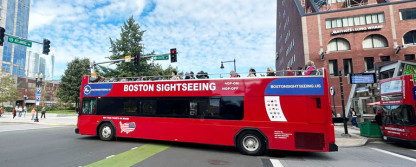
Single Ride Pass
$33.25
Explore Boston in 90 Minutes
Ride above the crowd and enjoy the panoramic view of Boston
- Boston City Tour Single Ride Pass
- Stop-1 to Stop-8
- Blue Route Tour
- Double-Decker Bus Tour
- 90 Minutes Tour
- 1 Day Validity
- Hop-on Hop-off Tour
- Charlestown Sightseeing Tour
You might also like
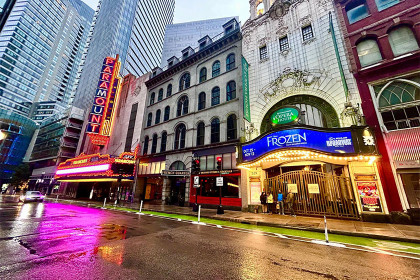
15 Unforgettable Things to Do in Boston at Night
Boston transforms after sunset into a playground of entertainment, culture, and excitement. Whether you’re planning a romantic evening, family..
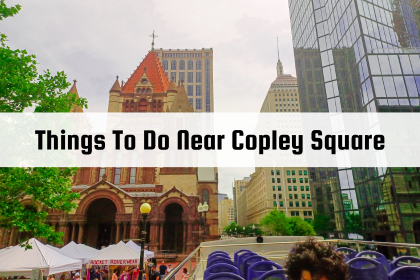
Things To Do Near Copley Square | Boston Sightseeing
Copley Square is one of the most popular destinations in Boston, surrounded by historic landmarks, shopping districts, cultural attractions...
Best Things To Do In North End Boston
The North End is the oldest residential neighborhood in Boston, settled in the 1630s and lived in continuously ever since.