


Best Things To Do In North End Boston
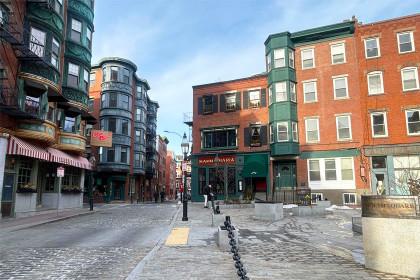
The North End is the oldest residential neighborhood in Boston, settled in the 1630s and lived in continuously ever since, and it packs three Freedom Trail sites, the city's oldest church, roughly a hundred restaurants, and a summer of Italian saint's feasts into 0.36 square miles. You can walk it end to end in an afternoon. This guide covers the historic sites with their addresses and admission, the parks and waterfront, where to eat and what to order, when the feasts happen, and how to fit the neighborhood into a wider day in Boston. Prices and hours were checked in September 2026 and change seasonally, so confirm before you go.
History Of North End
English Puritans settled the North End in the 1630s, when it was a peninsula of wharves, ropewalks, and merchants' houses separated from the rest of Boston by a creek. Paul Revere bought his house on North Square in 1770, and the Old North Church on Salem Street had already stood for half a century when its sexton hung two lanterns in the steeple on the night of April 18, 1775 to signal that British troops were crossing the Charles River toward Lexington and Concord. Two months later, British artillery fired on Charlestown from the top of Copp's Hill during the Battle of Bunker Hill.
The merchants left in the 1800s and immigrants arrived in waves: Irish first, then Eastern European Jews, Portuguese, and, from the 1880s onward, Italians from Sicily, Campania, and Abruzzo, who settled street by street according to the towns they had left. By the 1920s the neighborhood was almost entirely Italian, and the saint's feasts those villages brought with them still run every summer weekend. On January 15, 1919, a 2.3-million-gallon molasses tank on Commercial Street burst and sent a wave through the waterfront that killed 21 people, one of the strangest disasters in American history.
The elevated Central Artery cut the North End off from downtown from the 1950s until the Big Dig buried it in the 2000s and replaced it with the Rose Kennedy Greenway. Today about 10,000 people live here, the restaurants are still mostly family-owned, and a neighborhood history museum finally opened on Prince Street in July 2026.
Where Is North End Boston?
The North End sits on the northeast corner of the Boston peninsula, bounded by the Rose Kennedy Greenway to the west, Boston Harbor and the Charlestown Bridge to the north and east, and the waterfront near Long Wharf to the south. Hanover Street runs through the middle of it, from the Greenway to the harbor. The neighborhood covers 0.36 square miles and every attraction on this page is within a 15-minute walk of every other one.
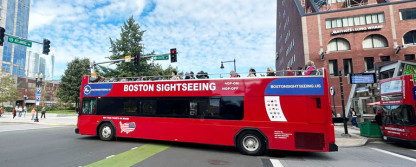
By subway, the closest stops are Haymarket on the Green and Orange Lines, about five minutes from the Hanover Street end of the neighborhood, and Aquarium on the Blue Line, about five minutes from the waterfront end. North Station, with Commuter Rail and Amtrak, is a ten-minute walk to Copp's Hill. Parking inside the North End is scarce and expensive; the garages on Commercial Street and at Lewis Wharf are the usual options, and public transit or the sightseeing bus is easier. The Boston Sightseeing hop-on hop-off bus stops at Stop 9, Historic North End, at 561 Commercial Street on the Orange Route, which is the same block as the Steriti ice rink and a three-minute walk to Copp's Hill.
Historical Attractions In North End
The Freedom Trail's red brick line runs straight through the North End and connects the three sites below. Walk them in order from Hanover Street toward the water and you will pass everything else on this page.
Old North Church
Old North Church, at 193 Salem Street, was built in 1723 and is the oldest surviving church building in Boston. Its official name is Christ Church. On the night of April 18, 1775, sexton Robert Newman and vestryman John Pulling climbed the steeple and held up two lanterns, Paul Revere's prearranged signal that the British were leaving Boston by water. Inside are the original box pews and a crypt holding about 1,100 burials. General admission is $5 and includes a self-guided walk through the sanctuary; the crypt and bell-chamber tours cost extra, and a combined ticket with the Old State House and Old South Meeting House is available. Hours run 10 AM to 5 PM Monday through Saturday and from 11:30 AM on Sundays, with shorter hours in winter. The Printing Office of Edes and Gill on the same campus gives free demonstrations of a colonial printing press. See our Old North Church guide for the full story of the lanterns.
Paul Revere House
The Paul Revere House at 19 North Square was built around 1680, which makes it the oldest building in downtown Boston and the only private home on the Freedom Trail. Revere bought it in 1770 and lived here with his family through the Revolution. Two rooms on each floor hold Revere family furniture, his silverwork, and the story of the midnight ride as it actually happened, which differs from the poem. Next door, the Pierce-Hichborn House from about 1711 is included on some tours. The house opens at 10 AM daily; closing time and the small admission fee change by season, so check before you visit. The Paul Revere House page covers what to look for inside.
Copp's Hill Burying Ground
Copp's Hill Burying Ground, at 21 Hull Street, was laid out in 1659 on land given by shoemaker William Copp, on a rise once called Windmill Hill. It is Boston's second-oldest cemetery and the largest colonial burying ground in the city, with thousands of artisans, merchants, and free Black residents of the North End buried here, including Prince Hall, founder of Black Freemasonry in America. During the Battle of Bunker Hill on June 17, 1775, British gunners used this hilltop to shell Charlestown across the river, and soldiers used the gravestones for target practice; some still carry musket-ball scars. Admission is free, and the hill gives the best view in the neighborhood of the harbor and the USS Constitution's masts. Our Copp's Hill guide lists the graves worth finding.
Paul Revere Mall (The Prado)
Between Hanover Street and Old North Church is a brick-paved walled park that locals call the Prado. An equestrian statue of Revere on his ride faces Hanover Street, a fountain sits in the middle, and bronze plaques on the walls tell the stories of North End residents who never made it into textbooks. It is the neighborhood's living room: street musicians, feast processions, and every Freedom Trail walker pass through it.
St. Stephen's Church
St. Stephen's, at 401 Hanover Street across from the Prado, is the only church by Charles Bulfinch, architect of the Massachusetts State House, still standing in Boston. It was remodeled to his design in 1804, and its bells were cast at Paul Revere's foundry. Rose Fitzgerald Kennedy was baptized here in 1890 and her funeral was held here in 1995.
Great Molasses Flood Site
A small plaque at the entrance to Puopolo Park, 529 Commercial Street, marks where the Purity Distilling Company's molasses tank stood when it burst on January 15, 1919. The wave was reported at 25 feet high and moved fast enough to knock buildings off their foundations; 21 people died and about 150 were injured. There is nothing left to see but the plaque and the harbor, which is exactly why it is worth a stop: the scale of what happened here is hard to picture on a quiet waterfront park.
North End Historical Museum
The North End Historical Museum at 3 Prince Street opened on July 21, 2026, the neighborhood's first museum of its own. It is only 850 square feet, but it covers 400 years through touchscreen timelines, a "Flavors of the North End" projection wall, and artifacts such as boxer Tony DeMarco's signed glove, with exhibits on the molasses flood and the 1950 Brink's robbery. Open Tuesday through Sunday, 10:30 AM to 5 PM; adults $10, children under 12 free. It sits on the Freedom Trail between the Paul Revere House and Old North Church.
USS Constitution Museum
Across the Charlestown Bridge from Copp's Hill, a 15-minute walk, the USS Constitution Museum in the Charlestown Navy Yard tells the story of the world's oldest commissioned warship still afloat, launched in Boston in 1797 and nicknamed Old Ironsides after British cannonballs bounced off her hull in the War of 1812. The ship itself is free to board. It is technically in Charlestown, not the North End, but most visitors combine the two, and the hop-on hop-off bus continues from Stop 9 to Stop 10 at the museum.
Other Attractions In North End
The historic sites are the reason most people come. The waterfront and the streets are the reason they stay longer than planned.
Hanover Street
Hanover Street is the North End's main street, running from the Greenway to the harbor. The restaurants, cafes, and pastry shops are concentrated between Cross Street and the Prado, and on a summer evening the sidewalks are full until midnight. The Freedom Trail follows it for two blocks. During feast season it closes to traffic and fills with food stalls.
Christopher Columbus Waterfront Park
At the southern edge of the neighborhood on Atlantic Avenue, next to Long Wharf, this harborside park has a long wisteria-covered trellis, a fountain, a playground, and the Rose Kennedy Garden. It is the best place in the North End to sit with a pastry and look at the harbor, and it connects directly to the New England Aquarium and the ferry docks.
The Harborwalk
Boston's Harborwalk runs along the North End's entire waterfront, from Long Wharf past Christopher Columbus Park, Lewis Wharf, Battery Wharf, and Puopolo Park to the Charlestown Bridge. Access it from the end of any street that runs east from Commercial Street. The stretch behind Battery Wharf has the clearest view across the water to the USS Constitution and the Zakim Bridge. See our Boston Waterfront guide for the rest of the route.
Rose Kennedy Greenway
The Greenway's North End parks, between Cross Street and the Charlestown Bridge, replaced the elevated highway that walled off the neighborhood for 50 years. They hold the seasonal Harbor Fog fountain, food trucks in summer, and the Greenway carousel a few blocks south near Faneuil Hall. The Greenway is also the easiest walking route to Chinatown, the Seaport, and the rest of downtown.
Steriti Memorial Rink
At 561 Commercial Street, the same block as Boston Sightseeing's Stop 9, this city-run rink offers public skating sessions in season around its hockey schedule, with skate rental on site. Check the public-skate hours before you plan around it; they are limited.
Italian Heritage And Food Culture
Italian immigrants began arriving in the 1880s, and by the 1920s the North End was almost entirely Italian. Many of the restaurants and bakeries on Hanover Street and Salem Street have been in the same families for three or four generations. Nearly a hundred restaurants operate in a neighborhood you can cross in ten minutes, which is why "where should we eat" is the question every visitor asks and why the answer below comes with addresses.
Famous Italian Restaurants
Regina Pizzeria at 11½ Thacher Street has been baking thin-crust pizza in the same brick oven since 1926 and calls itself Boston's original pizzeria; expect a line out the door on weekends. Galleria Umberto on Hanover Street sells Sicilian square slices and arancini at lunch only, cash only, and closes when the pizza runs out, usually by early afternoon. Neptune Oyster at 63 Salem Street has 37 seats, takes no reservations, and serves the lobster roll that most Boston food writers name as the city's best; go at opening. For a sit-down dinner, the restaurants clustered on Hanover Street between Cross Street and the Prado, and on North Square around the Paul Revere House, are the neighborhood's classic red-sauce and Northern Italian rooms; book ahead on Friday and Saturday.
Historic Bakeries And Cafes
Mike's Pastry at 300 Hanover Street, open since 1946, is the cannoli shop with the line down the block and the white-and-blue boxes you will see all over Boston. Modern Pastry at 257 Hanover Street, directly across the street, fills its cannoli to order and is the one locals tend to send you to. Bova's Bakery at 134 Salem Street has been baking since 1926 and is open 24 hours a day, which makes it the answer to "where can I get food at 3 AM in Boston." Caffe Vittoria on Hanover Street, open since 1929, is the oldest Italian cafe in the neighborhood; order an espresso and sit in the front room under the tin ceiling.
Food Experiences In North End
The way to eat here is to walk. Start with an espresso, split a Regina pizza or a Galleria Umberto slice at lunch, save room for a cannoli, and come back for dinner. If you are visiting between late July and the end of August, the feasts add street food to all of it: sausage and peppers, fried calamari, zeppole, and arancini from stalls along Hanover Street.
Festivals And Feasts In North End
Every summer weekend from late July through August, the North End's Italian religious societies hold multi-day street feasts, each honoring the patron saint of the Sicilian or Campanian town its founders came from. They are free, they close Hanover Street or the side streets to traffic, and they end with a procession carrying the saint's statue through the neighborhood. The 2026 season:
- Saint Joseph's Feast, July 24 to 26, Hanover Street
- Saint Agrippina di Mineo Feast, July 30 to August 2, Hanover Street, running since 1914
- Madonna della Cava Feast, August 7 to 9
- Fisherman's Feast of the Madonna del Soccorso di Sciacca, August 13 to 16, on North and Fleet Streets by the waterfront; the oldest continuous feast, since 1910, famous for the Flight of the Angel, when a girl is lowered from a third-floor window to greet the statue
- San Gennaro Feast, August 21 to 23
- Saint Anthony's Feast and Saint Lucy's Feast, August 27 to 30, on Endicott, Thacher, and North Margin Streets; the largest Italian religious festival in New England, running since 1919, with a ten-hour Grand Procession on the Sunday
Dates shift by a week or so each year; see our Boston annual events guide for the current calendar. Feast weekends are the most crowded time to visit and the most memorable.
Walking Through North End Boston
The neighborhood is small enough that a walking route is the only itinerary you need. This one takes about three hours with a meal.
Start on the Greenway at Cross Street and walk up Hanover Street, past the cafes, to St. Stephen's Church and the Prado. Cross the Prado to Old North Church (30 to 45 minutes inside). Continue up Hull Street to Copp's Hill for the harbor view, then down to Commercial Street and the molasses flood plaque at Puopolo Park. Follow the Harborwalk south along the water to Christopher Columbus Park. Cut back inland to North Square for the Paul Revere House and the new museum on Prince Street, then finish on Hanover Street for dinner and a cannoli. Wear shoes that can handle brick and cobblestone; the streets are narrow, uneven, and mostly without bike lanes or wide sidewalks.
See The North End With Boston Sightseeing
The North End is a walking neighborhood, and the bus is for getting to it and away from it without a car. Boston Sightseeing's Stop 9, Historic North End, is at 561 Commercial Street on the Orange Route, three minutes from Copp's Hill and five from Hanover Street. From there the route continues to the USS Constitution Museum in Charlestown and TD Garden, and back through the waterfront to the Aquarium. Hop off, spend your three hours here, and rejoin the next double-decker. See the hop-on hop-off route map for all 15 stops, book an all-day pass to board at any of them, or check our one-day Boston sightseeing itinerary to see where the North End fits in a single day.
Frequently Asked Questions
What is North End Boston known for?
The North End is known as Boston's Little Italy, for its Italian restaurants and pastry shops on Hanover Street, and for three Freedom Trail sites: Old North Church, the Paul Revere House, and Copp's Hill Burying Ground.
Where is the North End in Boston?
It is the northeast corner of downtown Boston, between the Rose Kennedy Greenway and Boston Harbor, a five-minute walk from Haymarket station or the Aquarium and a ten-minute walk from Faneuil Hall.
Is North End Boston worth visiting?
Yes. It is the one neighborhood in Boston where Revolutionary history, the waterfront, and the best concentration of Italian food in New England sit within a ten-minute walk of each other, and most of it is free to see.
How long should I spend in the North End?
Two to four hours covers the three Freedom Trail sites, a walk on the Harborwalk, and a meal. Add an hour for the USS Constitution across the bridge or the North End Historical Museum.
What is the best thing to eat in the North End?
Pizza at Regina or Galleria Umberto, a lobster roll at Neptune Oyster, and a cannoli from Mike's Pastry or Modern Pastry are the four things most first-time visitors come for.
When are the North End feasts?
Every weekend from late July through the end of August. The two biggest are the Fisherman's Feast in mid-August and Saint Anthony's Feast on the last weekend of August.
How far is the North End from Faneuil Hall?
About a ten-minute walk. Cross the Greenway from Faneuil Hall Marketplace at Cross Street and you are on Hanover Street.
Is Old North Church free?
No. General admission is $5, with add-on tours of the crypt and bell chamber. Copp's Hill Burying Ground, the Prado, and the waterfront parks are free.
Can I walk the Freedom Trail through the North End?
Yes. The red brick line enters the North End at Cross Street, runs up Hanover Street to the Paul Revere House, Old North Church, and Copp's Hill, then crosses the Charlestown Bridge to the USS Constitution and Bunker Hill. See our Freedom Trail guide for the full route.

Michael R. Thompson
Writer
Navigating the streets of Boston requires more than just a map; it requires the kind of insight that only 20...
Boston Attractions


Single Ride Pass
$33.25
Explore Boston in 90 Minutes
Ride above the crowd and enjoy the panoramic view of Boston
- Boston City Tour Single Ride Pass
- Stop-1 to Stop-8
- Blue Route Tour
- Double-Decker Bus Tour
- 90 Minutes Tour
- 1 Day Validity
- Hop-on Hop-off Tour
- Charlestown Sightseeing Tour
You might also like
15 Hidden Gems in Boston Worth Adding to Your Itinerary
Most visitors come to Boston to experience iconic attractions such as the Freedom Trail, Fenway Park, Boston Harbor, and Harvard University.
Best Museums to Visit in Boston
Boston is home to some of the most fascinating museums in the United States, offering visitors the chance to explore world-class art.
Fall Things To Do in Boston | Boston Sightseeing
Fall is one of the most scenic and popular seasons to explore Boston, with colourful foliage, historic neighborhoods, waterfront attractions...