


Charles Street Meeting House
The Charles Street Meeting House, also searched as the Charles St Meeting House, stands at the corner of Charles and Mount Vernon Streets in the Beacon Hill neighborhood of Boston. The Third Baptist Church completed it in 1807. In 1876 the First African Methodist Episcopal congregation bought it, and that congregation worshipped here until 1939. Today the building is private property and a stop on the Black Heritage Trail, so most visitors see it from the sidewalk. This page covers where the building is, what happened inside it, what you can do nearby, and how to reach it from a Boston Sightseeing stop.
Location
The Charles Street Meeting House is at 70 Charles Street in Boston, on the corner of Mount Vernon Street. Some listings use a Mount Vernon Street address for the same building, because it faces both streets. It sits in the Beacon Hill neighborhood of Boston, on Charles Street, which the City of Boston describes as Beacon Hill's main commercial area, running from Massachusetts General Hospital to the Public Garden.
History And Significance
The building has housed several congregations and causes since 1807, and each one left a mark on Beacon Hill. The story runs in three parts.
The Third Baptist Church, 1807 To 1876
The Third Baptist Church completed the meeting house in 1807. Asher Benjamin, a leading New England architect of the period, is credited with the design, although sources differ on how firmly. The site was chosen with water in mind. Before the Back Bay was filled in, the Charles River lay close by, which made baptisms easy to arrange. The building has a brick facade and a cupola.
Like most Boston churches of its day, Third Baptist assigned seats by race. In 1836, a white member named Timothy Gilbert invited several African American friends to sit in his pew. The church expelled him. Gilbert went on to help found the First Free Baptist Church, officially recognized in 1839, which became Tremont Temple. The National Park Service (NPS) says it was the first church in Boston to abolish pew rental fees.
Abolitionist Meetings
Before the Civil War, the meeting house was also a place for antislavery lectures and meetings. The NPS cites a 1937 Boston Globe article reporting that Frederick Douglass and Sojourner Truth spoke from the pulpit, and it says further research is needed to verify those claims. Other local histories also list William Lloyd Garrison, Wendell Phillips and Harriet Tubman, so treat the speaker lists as local history that is still being checked.
The Charles Street A.M.E. Church, 1876 To 1939
In 1876 the First African Methodist Episcopal congregation, which had been on Anderson Street, bought the building for $40,000. As the Charles Street A.M.E. Church, it became a church led by Black people for Black people, and the NPS describes it as the largest of Boston's five Black churches at the time.
The building also served as a meeting place for the wider community. In 1895, Black clubwomen organized by Josephine St. Pierre Ruffin held a session here, and delegates agreed to form the National Federation of Afro-American Women. The A.M.E. congregation held services here until 1939. The NPS calls the building the last Black institution to leave Beacon Hill. The congregation still exists as the Charles Street A.M.E. Church, now in Roxbury.
Later Uses And Restoration
After 1939 the meeting house passed through several hands, including Universalist and Unitarian Universalist congregations. In the 1970s it became a safe space for the gay, lesbian and bisexual community, and an NPS article says Gay Community News found refuge here in its first year before it moved in 1974. A private owner bought the building in 1979, and in 1980 a group of preservation-minded buyers took it over. They restored the exterior and converted the interior into offices with retail space on the ground floor. The project earned national preservation and architecture awards in the 1980s. The exterior looks much as it did in the A.M.E. years, while the inside was changed heavily.
Activity At Charles Street Meeting House
Many visitors expect a museum, so here is the plain answer. The NPS states that all Black Heritage Trail sites except the Robert Gould Shaw and 54th Massachusetts Regiment Memorial and the museum buildings are privately owned and not open to the public. The meeting house does not offer interior tours. What you can do is look closely, read the history, and connect it to the rest of the trail.
See The Exterior And Cupola
Stand across Charles Street and take in the whole front, then look up at the cupola. The restoration kept the exterior close to its look from the A.M.E. years, so the street view is the closest you can get to the building the congregation knew. The ground floor has held retail space, so a business there may welcome customers. The rest of the building is not a public attraction, so please respect the people who work there.
Walk The Black Heritage Trail
The NPS counts 10 sites on the Black Heritage Trail, and one NPS list places the meeting house fifth, between the John J. Smith House and the Lewis and Harriet Hayden House. You can begin at the Shaw Memorial on Boston Common, across from the Massachusetts State House, or at the African Meeting House. You can walk it on your own at any time, and the NPS offers a self-guided audio tour through its app. Rangers also lead tours of about 90 minutes on a seasonal schedule, and advance registration is required. Check the NPS site for current dates. The trail climbs the hill, with steep sections and uneven sidewalks.
Visit The African Meeting House And Abiel Smith School
Two Black Heritage Trail buildings are open to ticketed visitors. The African Meeting House and the Abiel Smith School, both operated by the Museum of African American History at 46 Joy Street, take timed tickets year-round. Confirm hours with the museum before you go. Seeing them after the Charles Street Meeting House gives you an inside view of the story that the sidewalk view only hints at.
Nearby Attractions
The meeting house works best as one stop on a longer Beacon Hill walk. After you see it, you can explore the charming Beacon Hill neighborhood, where red brick houses from the early 1800s line narrow cobblestone streets.
Charles Street In Beacon Hill, Boston
Charles Street is the practical place to start. The City of Boston describes it as lined with boutiques, antique stores and restaurants, and it is where you will find a coffee or lunch between historic sites. The meeting house sits on this street, so you can fold it into a stroll without any detour.
Louisburg Square And Acorn Street
Two of Beacon Hill's best known residential corners are close by. Louisburg Square and Acorn Street both reward a slow walk, and both are streets where people live, so keep voices low and stay off private steps.
Boston Public Garden And Boston Common
At the foot of Charles Street, the Boston Public Garden offers a calm stop for a stroll or a picnic. Boston Common lies just beyond it, and it is where many walkers start the Black Heritage Trail. Boston Common is Stop 4 on our Blue route, and Stop 5 is Cheers Pub on Beacon Street.
Frequently Asked Questions
Where is the Charles Street Meeting House?
It is at 70 Charles Street, on the corner of Mount Vernon Street, in the Beacon Hill neighborhood of Boston.
What is the address of the Charles Street Meeting House?
The commonly listed address is 70 Charles Street, Boston. Some listings use a Mount Vernon Street address because the building sits on the corner.
What is the Charles Street Meeting House?
It is a historic building completed in 1807 for the Third Baptist Church. It later served as the Charles Street A.M.E. Church and housed other congregations. It is a stop on the Black Heritage Trail.
Can you go inside the Charles Street Meeting House?
No. The NPS says the Black Heritage Trail buildings, other than the Shaw Memorial and the museum buildings, are privately owned and not open to the public. You can view the exterior from the street.
Who designed the Charles Street Meeting House?
The design is credited to Asher Benjamin. Some sources present this as an attribution rather than a documented fact, so it is safest to say it is attributed to him.
What was the Charles Street A.M.E. Church?
It was the First African Methodist Episcopal congregation that bought the building in 1876 and worshipped here until 1939. The NPS describes it as the largest of Boston's five Black churches at the time. The congregation still exists in Roxbury.
Why is the Charles Street Meeting House on the Black Heritage Trail?
The building was a center of antislavery activity and, from 1876, a Black-led church and community meeting place. In 1836 it was also the site of the Timothy Gilbert dispute over segregated seating.
What is the Charles Street Meeting House used for today?
It is privately owned. Histories describe it as offices with retail on the ground floor after its 1980s conversion, and occupants can change, so confirm any current use directly.
What is Charles Street in Boston known for?
Charles Street is Beacon Hill's main commercial street, running from Massachusetts General Hospital to the Public Garden. The City of Boston describes it as home to boutiques, antique stores and restaurants.
How do you get to the Charles Street Meeting House from Boston Sightseeing?
Get off at Stop 5, Cheers Pub, and walk into Beacon Hill. Our tour map lists the meeting house among the attractions near that stop. You need a ticket that includes Stop 5, such as the All Day ticket for Stops 1 to 8.
Planning Your Tour
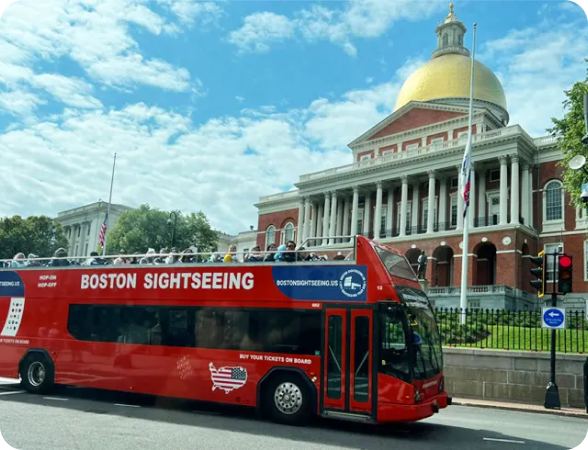
The stop nearest the meeting house on our tour map is Stop 5, Cheers Pub, on Beacon Street. The map lists the Charles Street Meeting House among the attractions near that stop. Stop 5 sits on the Blue route, which our All Day ticket covers from Stops 1 to 8. The Boston & Charlestown ticket covers Stops 1 to 11, and the 2 Days ticket gives you more time to spend on Beacon Hill.
A practical plan is to ride the Blue route first for orientation, then get off at Stop 5 and walk into Beacon Hill toward Charles Street. You can also start at Stop 4, Boston Common, where many walkers begin the Black Heritage Trail.
Current prices, session times and what each ticket includes are on the ticket cards below. Compare every option on the tour packages page, check the stops on the hop-on hop-off tour map, or read more about Boston Sightseeing double-decker tours.
Our Tour Packages
Single Ride Pass
$33.25
Explore Boston in 90 Minutes
Ride above the crowd and enjoy the panoramic view of Boston
- Boston City Tour Single Ride Pass
- Stop-1 to Stop-8
- Blue Route Tour
- Double-Decker Bus Tour
- 90 Minutes Tour
- 1 Day Validity
- Hop-on Hop-off Tour
- Charlestown Sightseeing Tour
Hop-On Hop-Off All Day
$41.55
Boston City Sightseeing Tour
Experience historic Boston with unlimited hop-on hop-off at your own pace.
- Stop-1 to Stop-8
- Hop-on Hop-off Boston Tour
- Blue Route Tour
- Double-Decker Bus Tour
- 90 Minutes tour
- 1 Day Validity
- Shuttle Bus Service
- Charlestown Tour
Hop-on Hop-off Boston & Charlestown Tour
$48.65
Boston & Charlestown Tour
Experience the charm of Boston & Charlestown with Boston Sightseeing at your own pace.
- Hop-on Hop-off Boston Tour
- Stop-1 to Stop-11
- Hop-on Hop-off Charlestown Tour
- Blue & Orange Route Tour
- Double-Decker Bus Tour
- Shuttle Bus Tour
- 120 Minutes Tour
- 1 Day Validity
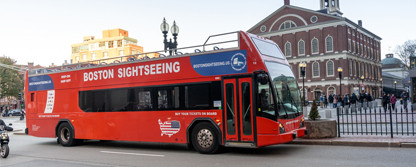
2 Days Boston & Charlestown Hop-On Hop-Off Tour
$70.40
2 Days Boston & Charlestown Tour
Explore Boston & Charlestown with Boston's first double-decker bus at your own pace.
- Hop-on Hop-off Boston Tour
- Stop-1 to Stop-11
- Hop-on Hop-off Charlestown Tour
- Blue & Orange Route Tour
- Double-Decker Bus Tour
- Shuttle Bus Tour
- 120 Minutes Tour
- 2 Days Validity
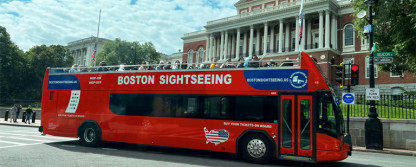
Cruise Terminal Hop-On Hop-Off Tour
$52.00
200 Minutes Hop-on Hop-off
Get onboard from Boston Cruise terminal and explore the historic beantown with Boston Sightseeing double-decker bus.
- Hop-on Hop-off Boston Tour
- Stop 1-8, 12-15
- Blue & Purple Route Tour
- Double-Decker Bus Tour
- Shuttle Bus Tour
- 200 Minutes Tour
- 1 Day Validity
- Charlestown Tour
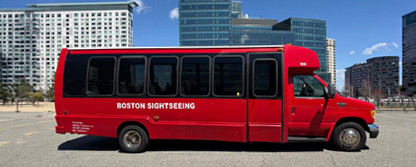
Boston & Cambridge City Tour
$63.00
Guided Photo & City Tour
A 3.5-hour guided shuttle tour featuring Boston’s most iconic neighborhoods, Cambridge highlights, waterfront views, and curated photo opportunities.
- Guided Boston & Cambridge sightseeing tour
- Approximately 3.5 hours
- Curated stops and photo opportunities
- Climate-controlled shuttle bus transportation
- Live local tour guide
- 45-minutes Quincy Market lunch break
- Same-day tour experience
- Double-Decker Bus Service
- Hop-on, hop-off service
Attractions To Explore Near This Stop

13 Best Fun Things To Do In Boston In Winter
Winter in Boston may be chilly, but that doesn't mean the city slows down. It's a popular time of year for tourists and locals alike...

Best Single Ride Pass Service In Boston
MAKE OUR CITY, YOUR NEXT ADVENTURE! Whether you’re just breezing through or enjoying an extended stay
Things To Do in Copley Square
Copley Square is one of Boston’s most iconic public spaces, located in the heart of Back Bay and surrounded by historic landmarks.