


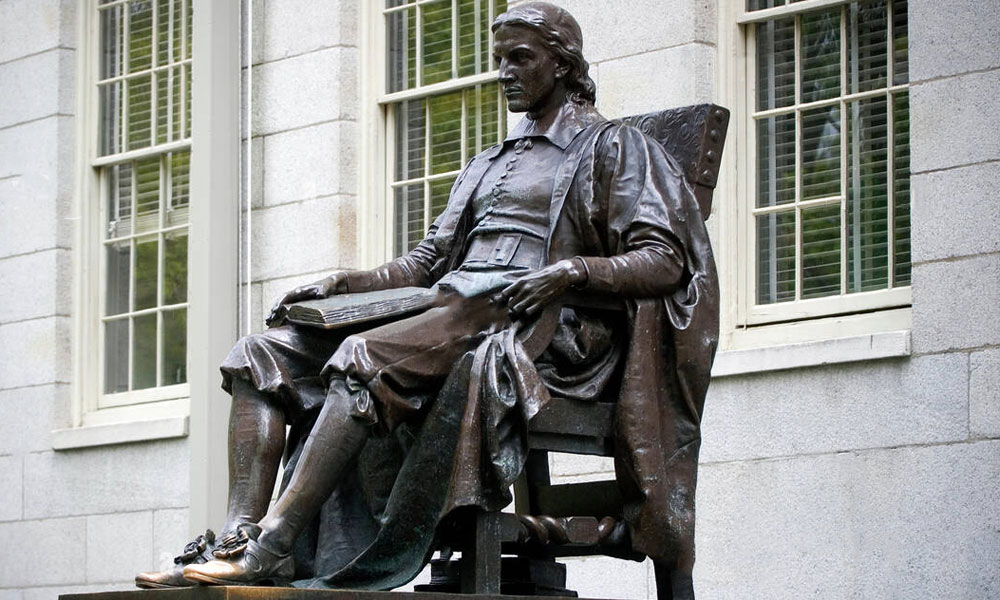
John Harvard Statue
The John Harvard Statue is one of the most photographed statues in the United States, a bronze figure seated in Harvard Yard that millions of visitors, prospective students, and Harvard families have stopped to see since 1884. Its fame rests on two things: the shine on its left shoe, polished bright by visitors touching it for luck, and a nickname almost every campus tour guide uses, the statue of three lies.
Harvard University sits at the heart of Cambridge, and this statue, near the university's oldest buildings, is usually the first stop on any walk through campus. It's not just a photo opportunity. The statue's own inscription is wrong in three separate ways, which is part of what makes it one of the more interesting stories behind any statue in Boston or Cambridge.
Location
The bronze figure sits in Harvard Yard, the historic center of Harvard University's campus, flanked by red brick buildings including University Hall and Massachusetts Hall. Because the Yard is open to the public and sits just steps from the Harvard Square T stop, the statue is easy to reach on foot without needing a campus tour or reservation.
Who Was John Harvard?
John Harvard was a young English clergyman who moved to Massachusetts in 1637. When he died of tuberculosis the following year, at just 30 years old, he left half his estate and his personal library of roughly 400 books to the fledgling college in Cambridge, which was then renamed Harvard College in his honor.
He was not the college's founder. Harvard College was established by vote of the Massachusetts Bay Colony's Great and General Court in 1636, a full year before John Harvard ever arrived in the colony. He was its first major benefactor, not its founder, a distinction the statue itself gets wrong (see below).
The Statue of Three Lies
Harvard's own students and tour guides have a nickname for this statue: the statue of three lies. Sculptor Daniel Chester French, who later created the seated Lincoln statue for the Lincoln Memorial in Washington, D.C., was commissioned to create it after Boston philanthropist Samuel James Bridge offered to fund it in an 1883 letter to Harvard alumni. It was dedicated on October 15, 1884, originally standing in front of Memorial Hall before moving to its current spot in Harvard Yard in 1924.
The three lies are carved right into the statue and its inscription:
- The statue doesn't depict John Harvard. No portrait of the real John Harvard survived; what few images may have existed were lost in a 1764 fire. With no likeness to work from, French modeled the face on Sherman Hoar, a member of Harvard's Class of 1882, and modeled the body on an unnamed, cash-strapped Oxford graduate who was paid to pose.
- The inscription calls him "Founder of Harvard College." As explained above, he wasn't. He was the college's first major benefactor, not its founder.
- The inscription is dated 1638. Harvard College was actually founded in 1636, two years earlier.
The irony, often pointed out on campus tours, is that Harvard's own motto is "Veritas," Latin for truth: a statue built on three factual errors stands at the symbolic center of a university whose motto translates to the opposite.
The Shoe-Touching Tradition
Rubbing the statue's left shoe for good luck is the best-known custom among visitors to the statue, and it's why the shoe looks noticeably brighter and shinier than the rest of the bronze figure. According to Harvard's own account of the statue's history, this shine is a relatively recent development, and several outside accounts go further, describing the custom as something closer to tour-guide folklore than an old student tradition. Vintage photographs of the statue show no such polish, which suggests it caught on sometime in the more recent past rather than stretching all the way back to 1884.
Visitors touch the shoe for a range of reasons passed down informally rather than officially endorsed by the university: some believe it brings good luck, some do it simply because every tour guide points it out, and prospective students sometimes treat a photo with the statue as a hopeful sign about where they'll end up going to college. None of these are university traditions in any formal sense, just stories that get repeated enough to stick.
The statue has also drawn its share of pranks over the years. Within a month of its 1884 unveiling, it was reportedly coated in tar, the first entry in what Harvard's own archives describe as a long-running series of campus pranks involving the statue.
Beyond the statue itself, Harvard Yard is worth a slow walk. Students cut across the lawns between classes, lounge on the grass between buildings that date back centuries, and the contrast between that daily campus life and the statue's 19th-century bronze is part of what makes a visit worthwhile.
Nearby Attractions
A few minutes' walk from the statue, the Harvard Museum of Natural History houses the Glass Flowers collection, a set of botanically accurate glass models made from 1886 to 1936 that remain unlike anything else on display anywhere. Close by, Harvard Art Museums brings together three separate collections, spanning ancient to modern work, under one roof.
Harvard Square itself, just outside the Yard, is worth building time into your visit, with bookstores, cafés, and a dense concentration of places to eat that reflect the neighborhood's long student population. For a different pace, a short walk brings you to the Charles River, where you can watch crew teams practice from the esplanade.
Frequently Asked Questions
What is the statue of three lies?
It's the nickname Harvard students and tour guides use for the John Harvard Statue, because three things about it are factually wrong: it doesn't depict the real John Harvard, its inscription calls him the college's founder when he was really its first major benefactor, and the inscription's date of 1638 is two years off from the college's actual 1636 founding.
Who was John Harvard?
John Harvard was an English clergyman who settled in Massachusetts in 1637 and died the following year at age 30. He left half his estate and his personal library to the young college in Cambridge, which was renamed in his honor, making him the college's first major benefactor rather than its founder.
Why do people touch John Harvard's shoe?
Touching the statue's left shoe for good luck is the best-known custom among visitors to the statue. It's informal, not an official university tradition, and it's why the shoe has a noticeably brighter shine than the rest of the bronze figure.
Is John Harvard Harvard's mascot?
Not officially. Harvard's athletic teams compete as the Crimson, a reference to the school color rather than a costumed mascot, and Harvard has no single traditional mascot the way many universities do. Some students and alumni informally call the John Harvard figure the closest thing the school has to one, but it isn't an official designation.
Who sculpted the John Harvard Statue?
Daniel Chester French sculpted the statue, which was dedicated on October 15, 1884. French later became much more widely known for the seated Lincoln statue inside the Lincoln Memorial in Washington, D.C.
Where exactly is the John Harvard Statue located?
The statue sits in Harvard Yard, the historic center of Harvard University's campus in Cambridge, a short walk from the Harvard Square T stop on the Red Line.
Is the John Harvard Statue worth visiting?
Yes. It's one of the most photographed statues in the country and a genuinely interesting stop, both for the statue's own backstory and for the chance to walk through one of the oldest college campuses in the United States.
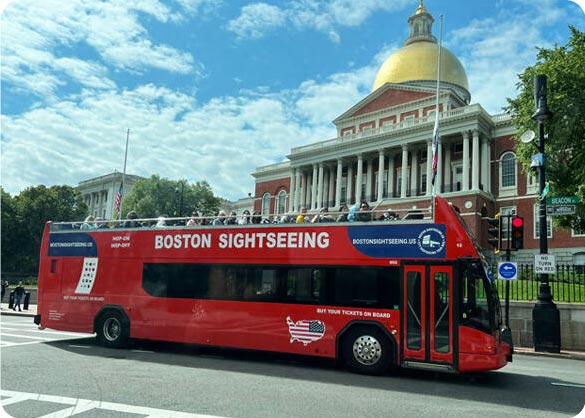
Plan Your Boston Tour with Boston Sightseeing
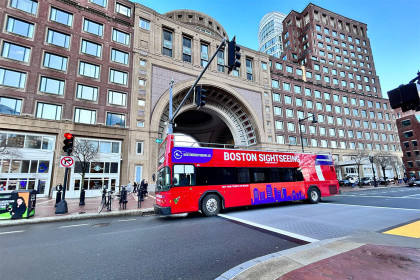
The easiest way to pair the John Harvard Statue with the rest of a Boston or Cambridge day is through a Boston Sightseeing Double-Decker Bus tour. The tour offers a panoramic view paired with informative commentary, so you don't miss the story behind the landmarks you pass. The John Harvard Statue is one of the stops where you can hop off, explore Harvard Yard at your own pace, and get back on when you're ready to keep seeing the city.
Our Tour Packages
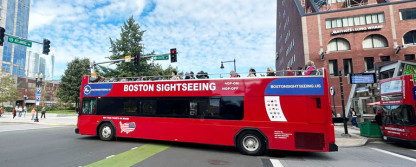
Single Ride Pass
$33.25
Explore Boston in 90 Minutes
Ride above the crowd and enjoy the panoramic view of Boston
- Boston City Tour Single Ride Pass
- Stop-1 to Stop-8
- Blue Route Tour
- Double-Decker Bus Tour
- 90 Minutes Tour
- 1 Day Validity
- Hop-on Hop-off Tour
- Charlestown Sightseeing Tour
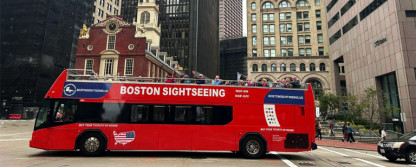
Hop-On Hop-Off All Day
$41.55
Boston City Sightseeing Tour
Experience historic Boston with unlimited hop-on hop-off at your own pace.
- Stop-1 to Stop-8
- Hop-on Hop-off Boston Tour
- Blue Route Tour
- Double-Decker Bus Tour
- 90 Minutes tour
- 1 Day Validity
- Shuttle Bus Service
- Charlestown Tour

Hop-on Hop-off Boston & Charlestown Tour
$48.65
Boston & Charlestown Tour
Experience the charm of Boston & Charlestown with Boston Sightseeing at your own pace.
- Hop-on Hop-off Boston Tour
- Stop-1 to Stop-11
- Hop-on Hop-off Charlestown Tour
- Blue & Orange Route Tour
- Double-Decker Bus Tour
- Shuttle Bus Tour
- 120 Minutes Tour
- 1 Day Validity
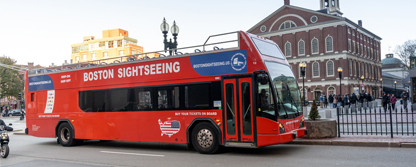
2 Days Boston & Charlestown Hop-On Hop-Off Tour
$70.40
2 Days Boston & Charlestown Tour
Explore Boston & Charlestown with Boston's first double-decker bus at your own pace.
- Hop-on Hop-off Boston Tour
- Stop-1 to Stop-11
- Hop-on Hop-off Charlestown Tour
- Blue & Orange Route Tour
- Double-Decker Bus Tour
- Shuttle Bus Tour
- 120 Minutes Tour
- 2 Days Validity
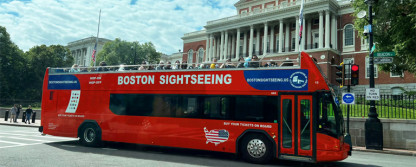
Cruise Terminal Hop-On Hop-Off Tour
$52.00
200 Minutes Hop-on Hop-off
Get onboard from Boston Cruise terminal and explore the historic beantown with Boston Sightseeing double-decker bus.
- Hop-on Hop-off Boston Tour
- Stop 1-8, 12-15
- Blue & Purple Route Tour
- Double-Decker Bus Tour
- Shuttle Bus Tour
- 200 Minutes Tour
- 1 Day Validity
- Charlestown Tour
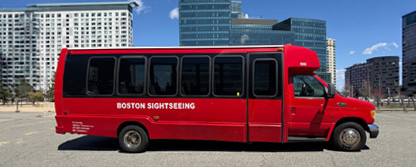
Boston & Cambridge City Tour
$63.00
Guided Photo & City Tour
A 3.5-hour guided shuttle tour featuring Boston’s most iconic neighborhoods, Cambridge highlights, waterfront views, and curated photo opportunities.
- Guided Boston & Cambridge sightseeing tour
- Approximately 3.5 hours
- Curated stops and photo opportunities
- Climate-controlled shuttle bus transportation
- Live local tour guide
- 45-minutes Quincy Market lunch break
- Same-day tour experience
- Double-Decker Bus Service
- Hop-on, hop-off service
Attractions To Explore Near This Stop
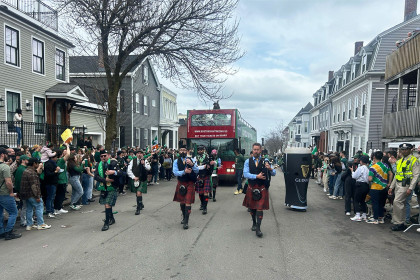
Annual Events In Boston
Boston runs on a full calendar of major annual events, from the oldest annual marathon in the country to a summer of neighborhood festivals.

Best Boston Tours For Every Type Of Vacation
Compare the best Boston tours for every traveler, including Boston sightseeing tours, Freedom Trail tours, harbor cruises, food tours & more.
What to Do in Boston On Next Weekend
This guide covers what to see and do whether you're here this weekend, next weekend, or fitting a short visit into any two or three days.